
“To reach a port, we must sail—sometimes with the wind, and sometimes against it, but we must not drift or lie at anchor.”
–Oliver Wendell Holmes, Sr. (1809–1894), American Physician, Poet, and Essayist
Volume 35
Flying Through Turbulence with a Strong Tailwind
What Happened in the Markets?
Subscribe and start receiving the Atlas Memo directly to your email

Anyone who’s flown enough knows this experience: you’re cruising along smoothly when the captain suddenly chimes in with that unmistakably calm voice pilots use right before delivering bad news. “Folks, we’re expecting a little turbulence ahead.”
The seatbelt sign flips on, the cabin rattles a bit, and for a few moments, it feels like the plane is bouncing around. But then—you glance at the flight tracker—and despite the bumps, you’re actually moving faster than expected thanks to a strong tailwind pushing you along.
That dynamic is an almost perfect illustration of where markets stand today. The ride isn’t perfectly smooth, and 2026 will likely bring its share of jolts, especially in a midterm year. But the underlying forces that push markets forward—earnings growth, consumer resilience, lower recession risk, and broad asset-class participation—remain firmly at our back.
In other words, the air may get choppy at times, but the tailwind is real.
Before we even look toward 2026, it’s worth acknowledging the foundation the market built this year. Multiple parts of the market finally worked together again—US stocks, international markets, bonds, and gold all posted meaningful gains. That sort of cross-asset strength doesn’t happen often, and when it does, it’s usually a sign that the underlying economic environment is sturdier than the headlines suggest.
Corporate earnings confirmed that strength. Not only did profits come in above expectations, but the growth was broad—not limited to a few mega-cap names. The depth of that earnings participation matters because it reduces concentration risk and historically supports more durable market advances. Consumer data also surprised to the upside. Despite constant warnings about household debt, most families continued to pay their bills on time, and debt-service costs relative to income remain comfortably below historical stress levels. That gives the economy more stability than the louder, gloomier narratives imply.
Put simply, we entered 2026 with altitude, momentum, and a structurally sound plane.
When you examine long-term market history, one trend becomes clear: in years without a recession—and that’s still the base case—markets finish higher the vast majority of the time. Not every year is extraordinary, but the probability of positive returns meaningfully outweighs the chance of deep losses.
On top of that, corporate earnings are expected to remain healthy, and analysts typically land within a tight margin of error during stable economic periods. When earnings are growing, and recession odds are low, the market tends to have a natural upward drift— one of the strongest tailwinds investors can ask for.
Even the global landscape is cooperating more than it has in recent years. Market leadership broadened in 2025, and diversification stopped feeling like something investors had to apologize for. That breadth acts like aerodynamic balance—it keeps the aircraft steadier even when the air pockets hit.
Turbulence is not a malfunction; it’s part of flying. And in markets, that turbulence often shows up most intensely during midterm election years.
Midterm years historically bring larger intrayear drawdowns—not because fundamentals break, but because uncertainty spikes. Investors try to handicap policy shifts, political dynamics, and future legislation. The market shakes a bit, investors grip the armrests a little tighter, and the captain’s voice might come over the speaker a few more times than usual.
But here’s the key: historically, those mid-year dips have been followed by powerful recoveries once the uncertainty clears. A year after the typical midterm-year low, markets have never been negative. That pattern is too consistent to ignore. So yes—expect pockets of choppy air. But also expect that they’re temporary.
Our message heading into 2026 is grounded, realistic, and optimistic without stretching into overconfidence.
The goal this year is to recalibrate expectations—not to promise smooth skies, but to reinforce confidence in the destination.
Whenever turbulence hits on a real flight, there’s a moment where passengers instinctively question whether the plane is still headed in the right direction. But if you’ve ever looked at the navigation display during a rough patch, you’ll notice something surprising: despite the shaking, the plane often moves more quickly thanks to winds pushing from behind.
That’s the story of 2026. The cabin may rattle at times, but the forces that matter—earnings, economic stability, resilient consumers, improving breadth—are still moving the market forward.
Our job is to help us stay buckled in, avoid emotional reactions at the wrong times, and trust the structural dynamics that carry us toward long-term goals.
Thank you for your partnership, for your trust, and for letting us navigate this journey together. Here’s to steady progress, even if a few bumps accompany the ride.
November was a choppy month for investors, marked by pockets of above-average volatility. The VIX spent part of the month in its 80th percentile range, reflecting the whiplash of shifting rate expectations, geopolitical headlines, and rapid rotations beneath the surface. Despite the turbulence, most major asset classes finished modestly higher.
The S&P 500 rose 0.25%, bringing its YTD total return to 17.8%, while small caps outperformed with a 0.96% gain. Tech-heavy names took a breather, as the Nasdaq 100 fell 1.57%, though it still leads with 21.8% YTD. Globally, returns were mixed: EAFE stocks gained 0.68%, while emerging markets slipped 1.98%; both remain among the strongest performers year-to-date at 28.0% and 30.0%, respectively.
Volatility didn’t spill over into bonds, which continued their steady climb. Treasuries and core fixed income advanced 0.59% and 0.62%, pushing their YTD totals to 6.6% and 7.5%. Credit markets were similarly constructive, with high yield and senior loans posting small gains.
In short, November felt more chaotic than the final numbers suggest. Underneath the modest index moves was a month defined by sharp intraday swings, sector rotations, and volatility spikes that investors could feel, even if it didn’t fully register in headline returns.
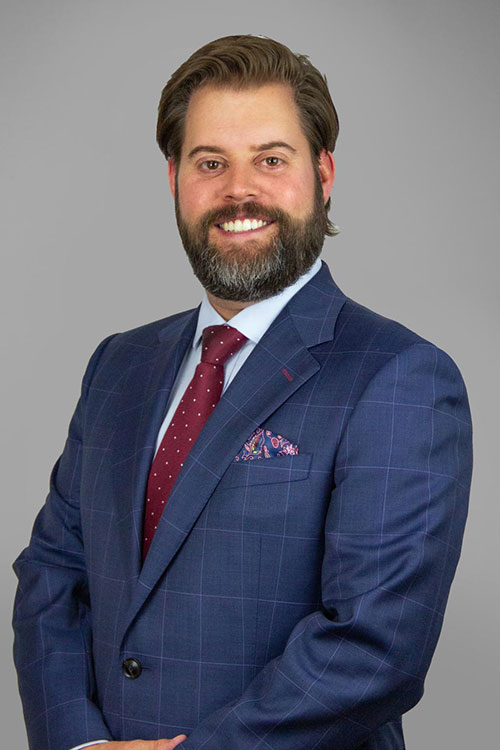
As the Chief Investment Officer, Stephen Swensen oversees investment management, research, portfolio design, and all investment-related operations at Atlas. He also chairs the Atlas Investment Committee, guiding strategic investment decisions.
Stephen’s career began as a Financial Analyst for Deseret Mutual Benefits Administration (DMBA), a role in which he managed investments for a private pension fund and insurance company. Subsequently, he served as an investment analyst and portfolio manager for local Registered Investment Advisors (RIAs). Before joining Atlas, Stephen contributed his expertise as an Outsourced Chief Investment Officer (OCIO) for the Carson Group, supporting advisors on the West Coast. Educationally, Stephen holds an MBA and an MS in Investment Management and Financial Analysis from Creighton University. He has earned the Series 65 Uniform Investment Advisor License and is actively pursuing the prestigious
Chartered Financial Analyst (CFA) designation.
Beyond his professional achievements, Stephen is an enthusiastic hockey fan, both on and off the ice. He finds joy in playing the piano, golfing, reading, and outdoor cooking. However, his greatest source of happiness comes from spending quality time with his wife and four children
NOTICE REGARDING INVESTMENT DISCLOSURES: The contents of this memo reflect the opinions of the author(s) as of the indicated date and are subject to change without notice. Atlas Investment Management has no obligation to update the information provided here. It should not be assumed that past investment performance guarantees future results. Potential for profit also entails the risk of loss.
The information presented is believed to be current and is not personalized investment advice. All opinions expressed are as of the date of the presentation and may change over time. All investment strategies carry the potential for profit or loss. Asset allocation and diversification cannot guarantee improved returns or eliminate the risk of investment losses. Target allocations may deviate due to market conditions and other factors. There is no guarantee that any investment or strategy will be suitable or profitable for an investor’s portfolio. Different types of investments involve varying levels of risk.
The charts and slides do not depict the performance of Atlas Investment Management or any of its advisory clients. Historical performance returns for investment indexes and/or categories typically do not factor in transaction and/or custodial charges or an advisory fee, which may decrease historical performance results. There is no assurance that an investor’s portfolio will match or exceed a specific benchmark.
This communication, including any attachments, is intended exclusively for the addressee and may contain proprietary, confidential, or privileged information. Unauthorized use, copying, disclosure, dissemination, or distribution is strictly prohibited. If you are not the intended recipient, please immediately notify the sender by return email, delete this communication, and destroy all copies.
Securities are offered through Purshe Kaplan Sterling Investments, Member FINRA/SIPC, headquartered at 80 State Street, Albany, NY 12207. Investment Advisory services are offered through Ignite Planners, LLC. Purshe Kaplan Sterling Investments and Ignite Planners, LLC are not affiliated companies. Ignite Planners, LLC conducts business only in states where it is properly registered or is excluded or exempted from registration requirements. SEC registration does not constitute an endorsement of the firm by the Commission and does not imply that the advisor has achieved a particular level of skill or ability. All investment strategies carry the potential for profit or loss.