“In this world nothing can be said to be certain, except death and taxes.”
–Benjamin Franklin (1706–1790), American Statesman and Founding Father
Volume 37
Did Your SALT Deduction Get a Raise?
The Thermostat, Not the Fireplace
What Happened in the Markets
Subscribe and start receiving the Atlas Memo directly to your email

For the last several years, the State and Local Tax (SALT) deduction has been the dark cloud over tax season for homeowners and residents of high-tax states. Capped at a flat $10,000 since 2018, many have found that the math simply doesn’t support itemizing deductions anymore.
That changed significantly in mid-2025.
With the passage of the One Big Beautiful Bill Act (OBBBA), the SALT cap has been quadrupled. For the 2025 tax year (the returns you are filing right now), the limit has jumped to $40,000. For 2026, it adjusts slightly for inflation to $40,400.
So what does that mean for tax planning in 2026?
Beyond the headline change, the expanded SALT deduction brings intentional timing back into tax planning. For households near the itemization threshold, decisions around when property taxes are paid, how state estimates are timed, and how charitable giving is structured can meaningfully affect outcomes. Deductions that were previously irrelevant under the old cap are once again worth coordinating, particularly for families with variable income or significant real estate exposure.
That said, this is not a universal windfall. The interaction between the SALT phase-out, potential AMT exposure, and overall income levels means some high earners may see more modest benefits than the headline suggests. And with the expanded cap scheduled to sunset in 2030, planning decisions should remain flexible and integrated into a broader financial strategy rather than pursued in isolation.
If you’ve been ignoring property tax timing or charitable giving because you weren’t itemizing, it’s time to run the numbers again. You may have a significant opportunity to lower your 2026 tax bill that didn’t exist two years ago.
In the winter, a fireplace is comforting. It draws attention, throws off heat, and can quickly warm a room. But if you rely on it alone, you’ll get uneven temperatures—too hot in one spot, cold everywhere else. A thermostat, on the other hand, doesn’t steal the show. It quietly keeps the whole house comfortable through changing conditions.
That’s how we think about commodities—and gold in particular—inside a diversified portfolio.
Over the past year, commodities have stepped firmly back into the spotlight. Precious metals led the way, with gold posting one of its strongest calendar-year performances in decades, driven by a combination of central-bank buying, declining real rates, and renewed investor demand as a hedge against geopolitical and fiscal uncertainty. Broader commodity indices also benefited from supply concentration, geopolitical friction, and strategic stockpiling of critical resources.
Gold, in particular, has transitioned from being purely cyclical to playing a more structural role in portfolios. Central banks—especially in emerging markets—continue to diversify their reserves away from the US dollar, creating a persistent source of demand that differs markedly from past gold cycles. That structural bid is real, and it matters.
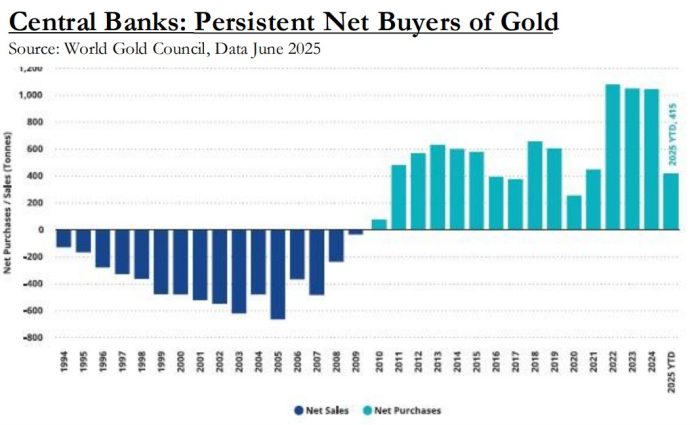
At the same time, it’s important to separate long-term fundamentals from short-term price behavior. After a strong run, parts of the precious-metals complex—most notably silver—are showing signs of being stretched, with price momentum running ahead of underlying industrial demand and ETF flows beginning to soften. That doesn’t invalidate the case, but it does argue for discipline.
Our view hasn’t changed: commodities and gold can play a valuable role as diversifiers, inflation hedges, and geopolitical insurance. But they work best as part of a broader allocation—not as a replacement for equities, fixed income, or cash flow-generating assets. We prefer exposure that is intentional, appropriately sized, and aligned with long-term portfolio objectives, rather than short-term headlines.
Which brings us back to the analogy. A fireplace is great to have—but only if the thermostat is doing its job. In portfolios, commodities and gold can provide warmth when conditions turn cold. Our job is to ensure the entire house remains comfortable, regardless of the season.
Markets started 2026 positively, with broad participation beyond the top US companies. While large US equities gained modestly—S&P 500 up 1.5%, Nasdaq 100 up 1.2%—broader leadership emerged. Small- and midcap stocks led, with the Russell 2000 up 5.4% and the S&P 400 up 4.0%, indicating confidence in domestic growth and resilience.
International equities were another clear bright spot. Developed markets climbed 5.1%, while emerging markets surged 8.1%, aided by a softer US dollar and improving global growth expectations. Broad global benchmarks echoed this trend, with ACWI up 2.8%
and ACWI ex-US gaining 5.7%, reinforcing the value of global diversification early in the year.
Fixed income was steady; US Treasuries and core bonds barely changed, returning 0.04% and 0.2%. Credit markets were mixed: high yield gained 0.5%, while senior loans fell 0.4%, showing selective risk appetite.
January’s market action focused less on headline returns and more on broader participation, strength outside crowded trades, and diversification. It was a solid, balanced start to the year, despite lacking fanfare.
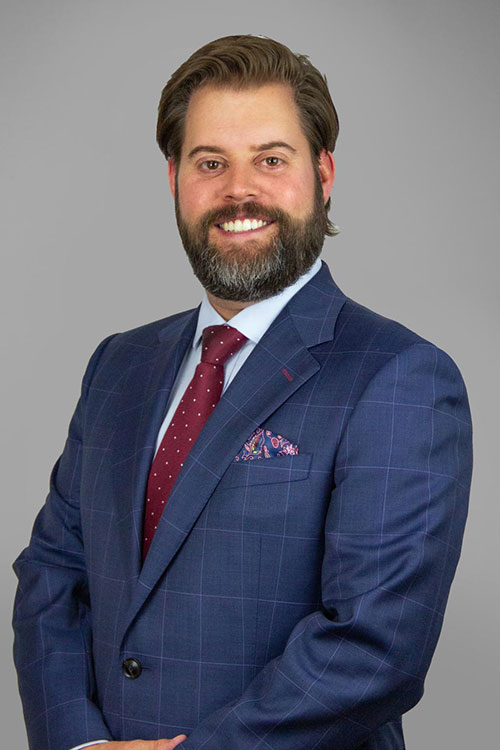
Ron, a seasoned CPA and CERTIFIED FINANCIAL PLANNER™, brings a wealth of experience to expertly address the financial planning needs of his clients. Holding a Master of Accountancy (Taxation) from Brigham Young University, Ron spent 12 years at Northwestern Mutual, where he acquired a diverse skill set and holds both a Life and Health Insurance License and Securities License.
With a multifaceted background, Ron is well-equipped to help clients optimize tax strategies, manage risks adeptly, and achieve substantial net worth growth. His ultimate goal is to guide clients toward financial freedom. Specializing in serving dentists, self-employed individuals, and small business owners, Ron demonstrates proficiency in navigating complex financial landscapes. He views dedication to his clients’ welfare as his foremost professional role.
In addition to his responsibilities at Atlas, Ron serves as the President of Foresight CPA Group, further highlighting his comprehensive understanding of financial intricacies and his role as a trusted professional.
Outside the financial realm, Ron cherishes spending time with his family – his wife, Lisa, and their three children. They share a passion for travel, boating, and beach outings. Ron also engages in marathon running, dedicated gym sessions, and occasionally ventures into ice and rock climbing. Finding solace in developing a personal meditation practice, Ron embraces a holistic approach to both his professional and personal life.
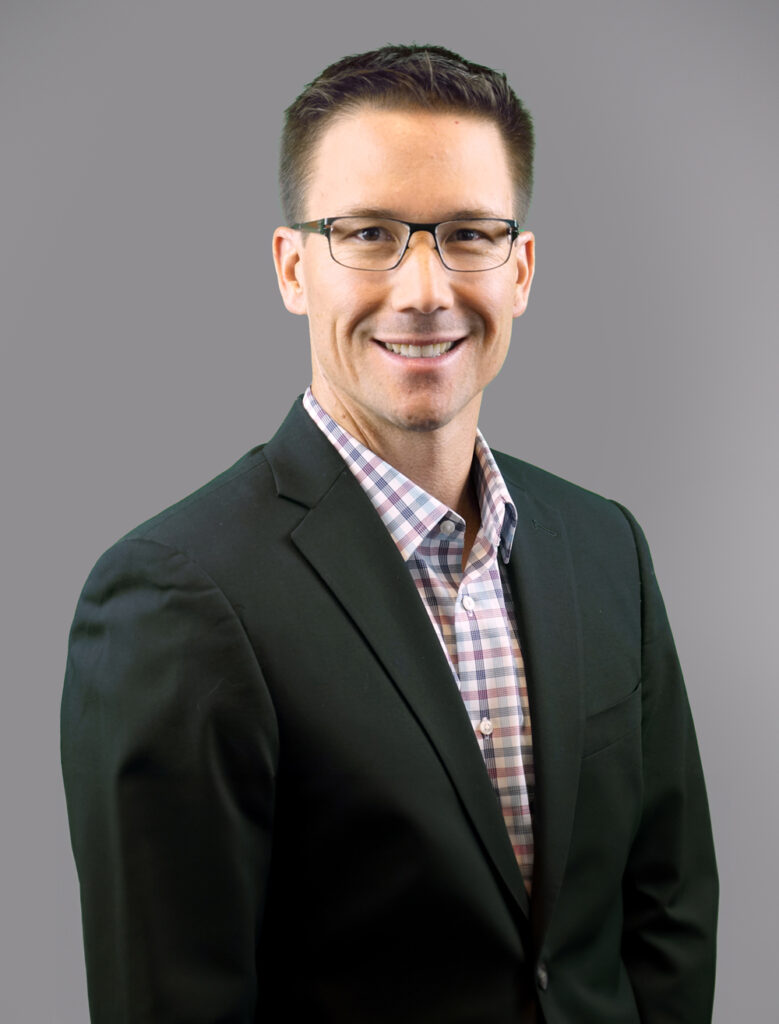
As the Chief Investment Officer, Stephen Swensen oversees investment management, research, portfolio design, and all investment-related operations at Atlas. He also chairs the Atlas Investment Committee, guiding strategic investment decisions.
Stephen’s career began as a Financial Analyst for Deseret Mutual Benefits Administration (DMBA), a role in which he managed investments for a private pension fund and insurance company. Subsequently, he served as an investment analyst and portfolio manager for local Registered Investment Advisors (RIAs). Before joining Atlas, Stephen contributed his expertise as an Outsourced Chief Investment Officer (OCIO) for the Carson Group, supporting advisors on the West Coast. Educationally, Stephen holds an MBA and an MS in Investment Management and Financial Analysis from Creighton University. He has earned the Series 65 Uniform Investment Advisor License and is actively pursuing the prestigious
Chartered Financial Analyst (CFA) designation.
Beyond his professional achievements, Stephen is an enthusiastic hockey fan, both on and off the ice. He finds joy in playing the piano, golfing, reading, and outdoor cooking. However, his greatest source of happiness comes from spending quality time with his wife and four children
NOTICE REGARDING INVESTMENT DISCLOSURES: The contents of this memo reflect the opinions of the author(s) as of the indicated date and are subject to change without notice. Atlas Investment Management has no obligation to update the information provided here. It should not be assumed that past investment performance guarantees future results. Potential for profit also entails the risk of loss.
The information presented is believed to be current and is not personalized investment advice. All opinions expressed are as of the date of the presentation and may change over time. All investment strategies carry the potential for profit or loss. Asset allocation and diversification cannot guarantee improved returns or eliminate the risk of investment losses. Target allocations may deviate due to market conditions and other factors. There is no guarantee that any investment or strategy will be suitable or profitable for an investor’s portfolio. Different types of investments involve varying levels of risk.
The charts and slides do not depict the performance of Atlas Investment Management or any of its advisory clients. Historical performance returns for investment indexes and/or categories typically do not factor in transaction and/or custodial charges or an advisory fee, which may decrease historical performance results. There is no assurance that an investor’s portfolio will match or exceed a specific benchmark.
This communication, including any attachments, is intended exclusively for the addressee and may contain proprietary, confidential, or privileged information. Unauthorized use, copying, disclosure, dissemination, or distribution is strictly prohibited. If you are not the intended recipient, please immediately notify the sender by return email, delete this communication, and destroy all copies.
Securities are offered through Purshe Kaplan Sterling Investments, Member FINRA/SIPC, headquartered at 80 State Street, Albany, NY 12207. Investment Advisory services are offered through Ignite Planners, LLC. Purshe Kaplan Sterling Investments and Ignite Planners, LLC are not affiliated companies. Ignite Planners, LLC conducts business only in states where it is properly registered or is excluded or exempted from registration requirements. SEC registration does not constitute an endorsement of the firm by the Commission and does not imply that the advisor has achieved a particular level of skill or ability. All investment strategies carry the potential for profit or loss.