
“Individual quality decides games, but teamwork wins championships.”
–Carlo Ancelotti, UEFA Champions League 5x Championship Manager
Volume 38
Winning the Financial Championship
Bumping the Table of Trade Policy and Tariffs
What Happened in the Markets?
Subscribe and start receiving the Atlas Memo directly to your email

Ancelotti is the only manager to have won league titles in all five of Europe’s major soccer leagues and the most successful coach in Champions League history. He accomplished this by not placing the team on the shoulders of a single star; he supported his talent across the organization and across roles for the entire team. Ancelotti’s Perspective is something I have strived to instill in my son’s soccer team in all the years I have been coaching them. With nearly two decades of experience in the financial industry, this principle applies perfectly to your financial plan.
An individual’s “Championship” would be how accurately were they able to define and accomplish their financial goals. For some, this may be leaving a legacy for their family, to leave money to a charity that has inspired them, and to some, it is to spend every penny on making memories with their children and grandchildren. When an Advisor, CPA, and Attorney are all playing together, it makes winning that championship much easier.
Each member of this team has a critical role in the success of your financial plan. The Estate plan dictates how the assets you have spent your whole life working and saving for are passed according to your wishes. Your CPA helps mitigate taxation traps, plan for income efficiency, and prepare and support the tax filing process. The Financial Advisor steps in as the connector; the person responsible for making the day-to-day pieces of your financial life work together. Including how income is generated from your assets, coordinating distributions, and ensuring accounts are structured in coordination with both your tax strategy and your estate plan. The advisor works closely with your CPA to evaluate tax efficiency for income, investments, and timing, and with your attorney to ensure account ownership, beneficiary designations, and planning strategies are properly implemented. Beyond the technical details, the advisor helps transform long-term goals into action items, educates family members on the broader vision for your assets, and serves as the central point of communication as life evolves. When something changes, or is about to, the advisor becomes the first call, helping coordinate the right discussions with the rest of your financial team so decisions are made with full context and clarity.
When professionals operate in isolation, no matter how well intentioned there can be gaps. If accounts aren’t titled correctly the estate plan could fail… If the estate plan misses an asset, it could be required to go through probate… If assets are transferred incorrectly, it could result in significant tax liabilities. Coordinating these professionals is not about creating a complex system; it is about ensuring all decisions align with your long-term goals.
The only constant in life is change. Having a close relationship with your advisor can allow for deeper coordination, allowing everyone to understand your priorities and remailed aligned on how one decision can affect another part of the plan. A well-organized team will shift and adjust as your life evolves. Careers will change, families will grow, retirement will come and priorities can change. This team should inspire confidence and create a lasting peace of mind for your family.
In the end, your “Championship” shouldn’t be about investment return, tax savings, or wealth transfer. It should be centered on your vision and goals for the life you have created, and on blessing the people and organizations that are important to you.
At our house, we’ll occasionally build an elaborate Lego structure together—layer by layer, piece by piece. It can look perfectly sturdy from the outside, until someone bumps the table and we realize a foundational block wasn’t quite locked in. Then it’s back to rebuilding—this time with a tighter fit and a stronger base.
Last month, the Supreme Court effectively bumped the table on trade policy. It ruled that IEEPA does not authorize a president to impose tariffs, reinforcing that Congress—not the executive branch—holds that authority. In practical terms, a meaningful portion of recent tariffs could fall away, lowering the effective tariff rate and creating a near-term tailwind for US businesses.
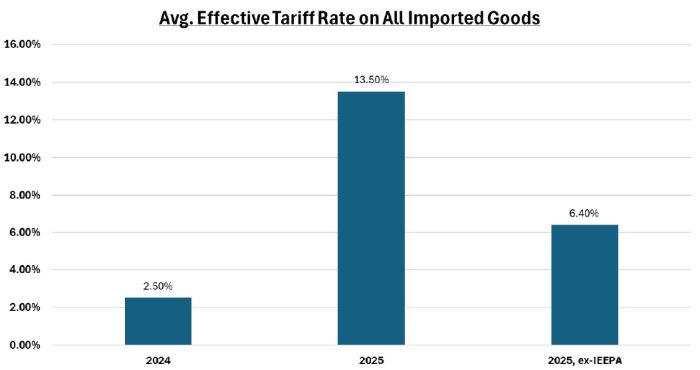
That does not mean tariffs disappear. Other statutory tools—like Sections 122, 301, and 232—remain available, though they require more process and time. Translation: less immediacy, more friction. Markets generally prefer that kind of structure.
There is also the question of refunds. Treasury has collected significant revenue under the now-invalidated authority, and while refunds are not automatic, they may ultimately work their way back to importers. Think of it as a potential corporate tax refund—supportive for corporate margins, but unlikely to translate directly into lower consumer prices.
The bigger picture? Policy uncertainty hasn’t vanished—but it now operates within clearer guardrails. Slower, more procedural channels reduce the probability of sudden, sweeping shocks. As our Lego rebuild, the framework may shift—but with a more defined foundation, the structure often ends up stronger than before.
As always, we remain disciplined, diversified, and focused on long-term opportunity rather than reacting to every bump of the table.
February was defined by rotation rather than broad weakness. While large US indexes pulled back—the S&P 500 declined 0.9% and the Nasdaq 100 fell 2.3%—leadership broadened beneath the surface. Mid-cap stocks led domestically, with the S&P 400 up 4.1%, and the Russell 2000 gained 0.8%, signaling improving participation beyond mega-cap technology.
International markets were the clear standout. Developed equities rose 4.7%, emerging markets climbed 5.7%, and ACWI ex-US advanced 5.0%, lifting global equities overall to a 1.3% gain. The move reinforced the value of global diversification at a time when US leadership paused.
Fixed income added stability. US Treasuries returned 1.8% and the US Aggregate Bond Index gained 1.6%. Credit was mixed, with high yield essentially flat at 0.1% and senior loans down 1.5%. In short, February highlighted shifting leadership and the benefits of staying diversified rather than concentrated in last year’s winners.
Chace, a dedicated financial professional, joined Atlas in 2015 after gaining experience in Medicare Insurance sales and the banking industry. These early roles laid the foundation for his current success. Valuing dependability as one of the highest compliments, Chace considers it one of his greatest strengths. He is driven by a passion for helping people solve problems, overseeing clients’ financial futures, and establishing enduring relationships.
Backed by a skilled team of client service representatives, operations specialists, analysts, and advisors, Chace and his colleagues at Atlas are committed to delivering an exceptional client experience. Chace earned his BS in Personal Financial Planning from Utah Valley University, graduating from one of the nation’s top three programs. He solidified his expertise by passing the CERTIFIED FINANCIAL PLANNER™ exam.
Chace specializes in crafting comprehensive financial plans, managing cashflow, and strategically allocating risk and portfolio assets to ensure stability in client plans. Beyond his professional endeavors, Chace finds joy in his role as a husband to his beautiful wife Jade and a father to three incredible children. When not assisting clients, he can be found coaching little league soccer, enjoying boating, spearfishing, mountain biking, or creating lasting memories with family and friends.
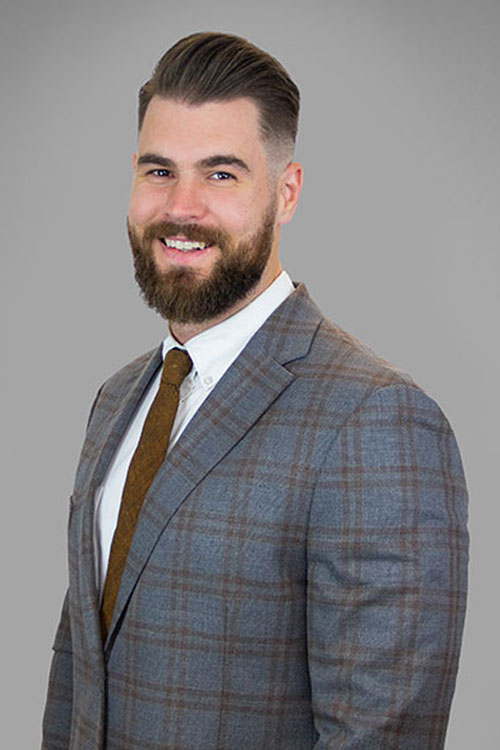
As the Chief Investment Officer, Stephen Swensen oversees investment management, research, portfolio design, and all investment-related operations at Atlas. He also chairs the Atlas Investment Committee, guiding strategic investment decisions.
Stephen’s career began as a Financial Analyst for Deseret Mutual Benefits Administration (DMBA), a role in which he managed investments for a private pension fund and insurance company. Subsequently, he served as an investment analyst and portfolio manager for local Registered Investment Advisors (RIAs). Before joining Atlas, Stephen contributed his expertise as an Outsourced Chief Investment Officer (OCIO) for the Carson Group, supporting advisors on the West Coast. Educationally, Stephen holds an MBA and an MS in Investment Management and Financial Analysis from Creighton University. He has earned the Series 65 Uniform Investment Advisor License and is actively pursuing the prestigious
Chartered Financial Analyst (CFA) designation.
Beyond his professional achievements, Stephen is an enthusiastic hockey fan, both on and off the ice. He finds joy in playing the piano, golfing, reading, and outdoor cooking. However, his greatest source of happiness comes from spending quality time with his wife and four children
NOTICE REGARDING INVESTMENT DISCLOSURES: The contents of this memo reflect the opinions of the author(s) as of the indicated date and are subject to change without notice. Atlas Investment Management has no obligation to update the information provided here. It should not be assumed that past investment performance guarantees future results. Potential for profit also entails the risk of loss.
The information presented is believed to be current and is not personalized investment advice. All opinions expressed are as of the date of the presentation and may change over time. All investment strategies carry the potential for profit or loss. Asset allocation and diversification cannot guarantee improved returns or eliminate the risk of investment losses. Target allocations may deviate due to market conditions and other factors. There is no guarantee that any investment or strategy will be suitable or profitable for an investor’s portfolio. Different types of investments involve varying levels of risk.
The charts and slides do not depict the performance of Atlas Investment Management or any of its advisory clients. Historical performance returns for investment indexes and/or categories typically do not factor in transaction and/or custodial charges or an advisory fee, which may decrease historical performance results. There is no assurance that an investor’s portfolio will match or exceed a specific benchmark.
This communication, including any attachments, is intended exclusively for the addressee and may contain proprietary, confidential, or privileged information. Unauthorized use, copying, disclosure, dissemination, or distribution is strictly prohibited. If you are not the intended recipient, please immediately notify the sender by return email, delete this communication, and destroy all copies.
Securities are offered through Purshe Kaplan Sterling Investments, Member FINRA/SIPC, headquartered at 80 State Street, Albany, NY 12207. Investment Advisory services are offered through Ignite Planners, LLC. Purshe Kaplan Sterling Investments and Ignite Planners, LLC are not affiliated companies. Ignite Planners, LLC conducts business only in states where it is properly registered or is excluded or exempted from registration requirements. SEC registration does not constitute an endorsement of the firm by the Commission and does not imply that the advisor has achieved a particular level of skill or ability. All investment strategies carry the potential for profit or loss.